
Modern Architecture Wall Art: A Guide to Curating Structural Beauty in 2026
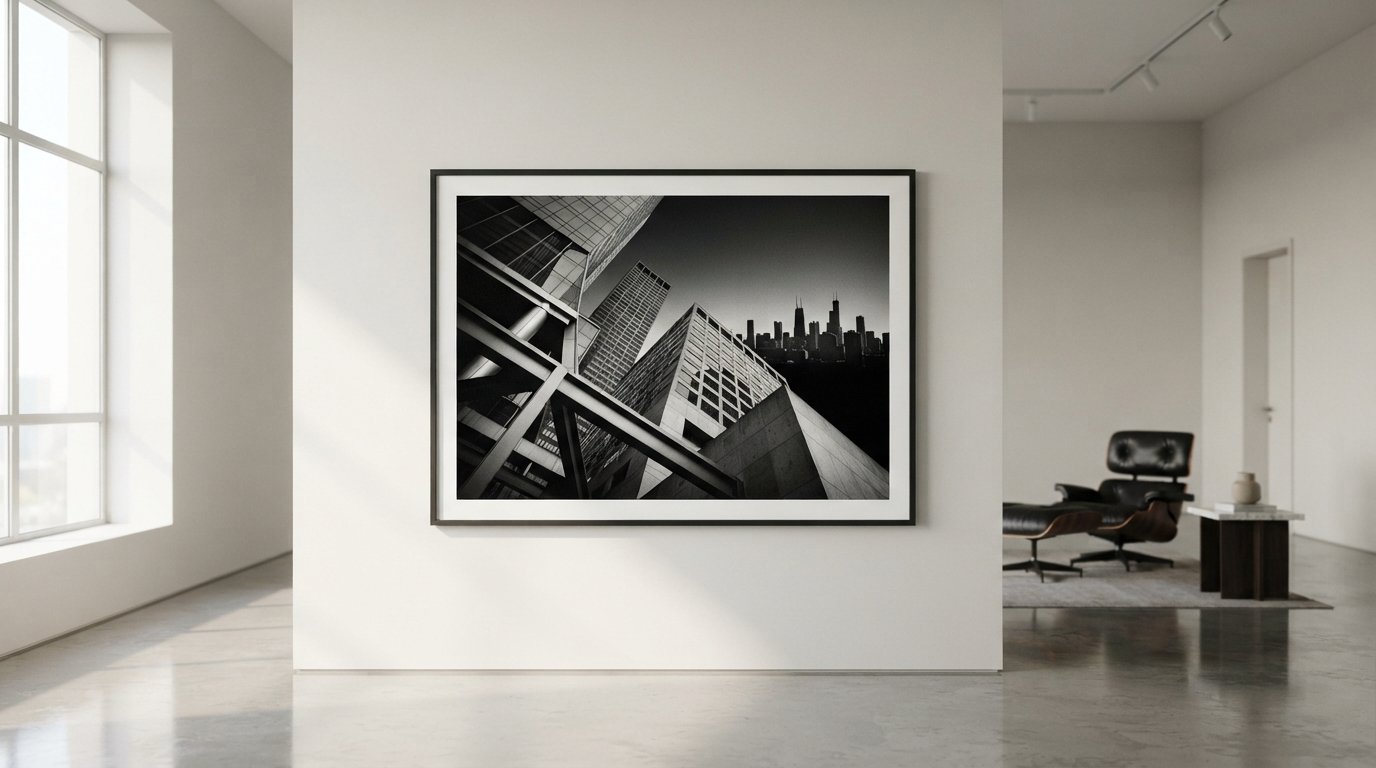
Placing an undersized print above a nine-foot sectional sofa has the visual presence of a single postage stamp slapped onto a billboard. It's a quiet design tragedy that transforms a sophisticated home into something resembling an awkward dentist's waiting room. Most collectors feel overwhelmed by generic, pixelated cityscapes that lack the gravity of true structural design. You likely want a space that feels curated and professional, not a collection of mass-produced afterthoughts. Selecting the perfect modern architecture wall art is an exercise in honoring the rhythmic interplay of light, shadow, and steel.
This guide reveals how to transform your environment with sophisticated architectural photography that captures the soul of modern design. We'll examine the technical precision required for gallery-standard displays, including the 57-inch eye-level rule and proper furniture scaling. You'll discover the profound difference between disposable decor and museum-quality fine art, focusing on iconic Chicago-inspired black and white prints. We'll cover everything from lighting temperatures to conservation glazing to ensure your collection commands the respect it deserves.
Key Takeaways
- Understand how structural photography acts as the visual anchor that prevents your room from feeling like it’s being held together by nothing more than hope and a few throw pillows.
- Discover how monochrome acts as a visual mute button, silencing the chaotic static of color to reveal the building's raw, rhythmic bones.
- Learn to differentiate between iconic urban monuments and abstract geometric fragments, ensuring your home feels like a curated gallery rather than a high-end souvenir shop.
- Apply the Breathability Rule to your modern architecture wall art to ensure your large-scale pieces have the space to command attention instead of looking like they're trapped in a crowded elevator.
What is Modern Architecture Wall Art?
Choosing art is like choosing a roommate; you want something that looks good in a suit and knows when to be quiet. You don't want a loud, neon distraction that screams for attention every time you enter the room. Instead, modern architecture wall art acts as a photographic study of structural form, light, and geometry. It serves as a grounding, sophisticated element in contemporary interior design, offering a sense of permanence that fleeting trends lack.
To better understand this concept, watch this helpful video:
When selecting modern architecture wall art, it's vital to distinguish between literal, "postcard" cityscapes and abstract architectural photography that focuses on structural details. One tells you where you are; the other tells you how to feel. If you study the history of architectural photography, you'll see how the medium evolved from simple documentation to high art. It isn't just about capturing a facade. It's about isolating the rhythm of a steel beam or the way glass reflects a bruised Chicago sky.
The Aesthetic Impact on Modern Interiors
Structural lines create a sense of order and calm in a room, much like a well-tailored blazer brings order to a messy wardrobe. In minimalist and industrial spaces, these pieces provide a visual anchor that prevents the room from feeling hollow. They celebrate the intersection of human ingenuity and physical materials. Architectural art is a window into the structural soul of the city.
The Range of the Genre: From Skyscraper to Detail
The genre offers diverse perspectives for different environments. Wide-angle skyline views create expansive focal points in large rooms, providing a sense of urban ambition. Conversely, macro shots of building textures like steel, glass, and stone offer an abstract appeal. These close-ups focus on the sensory details of the environment, turning a simple skyscraper into a geometric meditation on material and form.
The Power of Black and White in Architectural Photography
Color is the loud uncle at a wedding; black and white is the tailored tuxedo that makes everyone look like they belong in a Bond film. In the context of modern architecture wall art, monochrome acts as a visual mute button for the chaotic static of the real world. It strips away the seasonal shifts and mismatched window tints that often clutter a scene. By removing these distractions, the viewer is forced to confront the pure structural form of the building itself.
The interplay of light and shadow becomes the primary narrator in a black and white composition. High-contrast prints sculpt depth into a flat surface, turning a two-dimensional image into a tectonic experience. As noted in the Getty Museum's study of architecture in photography, the medium is as much about the absence of light as it is about its presence. This dramatic sculpting is what allows architectural photography to transcend mere documentation and enter the gallery space.
Texture and Materiality Without Color
Without the interference of hue, the raw personality of materials emerges. You can almost feel the rough grain of board-formed concrete or the cold, clinical sheen of curtain-wall glass. This focus on texture is essential for high-quality modern architecture wall art, as it highlights the interplay between natural light and man-made surfaces. It transforms a physical record of a skyscraper into a sensory experience that invites deep contemplation.
Integrating Monochrome Prints into Your Space
Monochrome is the most sophisticated choice for diverse interior color palettes because it refuses to compete with your furniture. It provides a visual anchor, allowing you to build a gallery wall of varied art styles without creating a chaotic mess. If you're looking to elevate your collection, exploring Chicago architecture prints in black and white offers a timeless foundation that brings a sense of permanence and elegance to any modern environment.
Abstract vs. Iconic: Choosing Your Perspective
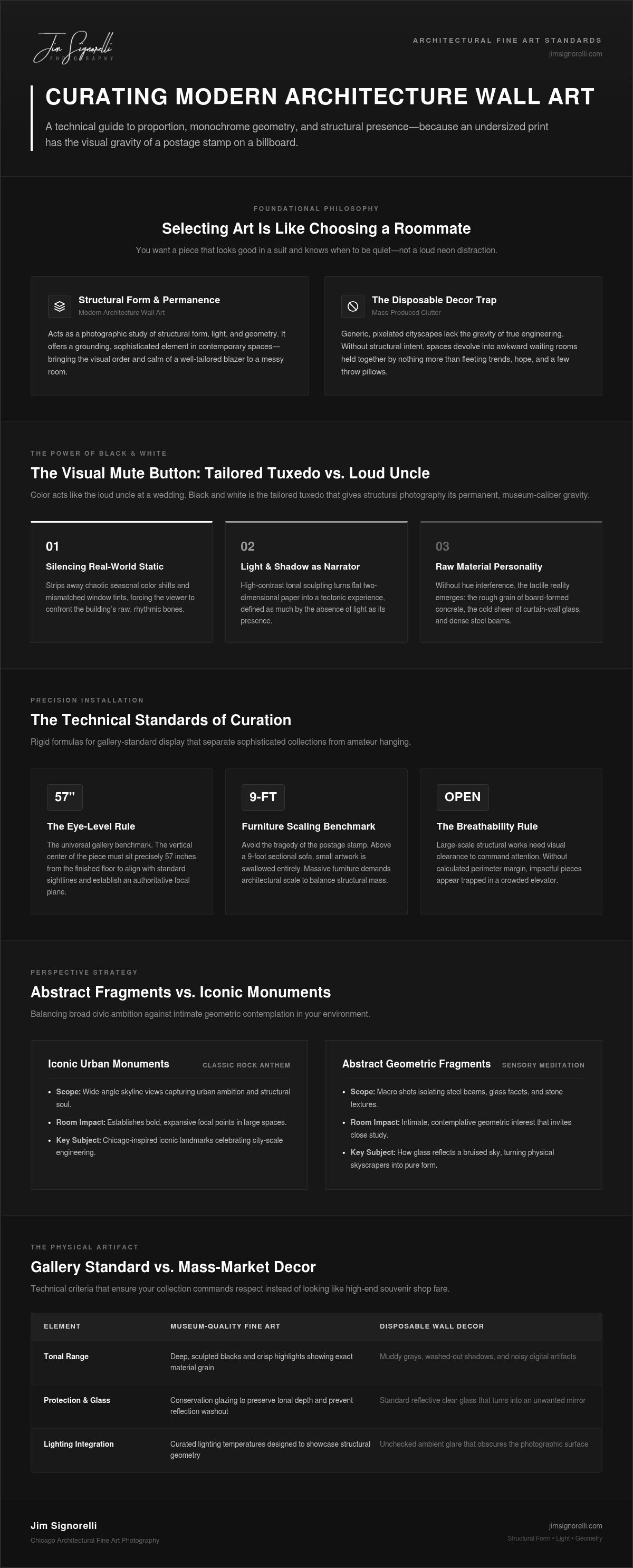
An iconic skyline is like a classic rock anthem. It's bold, familiar, and demands a certain level of volume. An abstract detail is more like a jazz solo; its power lies in the notes not played. When selecting modern architecture wall art, you must decide whether you want a grand narrative or a quiet meditation. Skyscraper wall art serves as a powerful tribute to urban ambition and human ingenuity. It celebrates the collective will to reach higher. Conversely, abstract patterns offer an intimate dialogue with the building's soul, focusing on the feeling of the structure rather than its name.
The Allure of the Iconic Chicago Skyline
Chicago remains the global mecca of modern architectural photography. It's where the skyscraper was born and where it continues to evolve. Capturing the Willis Tower or the John Hancock Center through a fine-art lens requires more than just a camera; it requires an understanding of tectonic gravity. These structures aren't just buildings. They're monuments to a specific era of design. To ensure these captures last for generations, collectors should follow the Library of Congress framing and display guidelines to mitigate light damage and preserve paper integrity.
Abstract Details: Finding Beauty in the Mundane
Abstract architecture isn't about the building; it's about capturing the feeling of the structure through its repetitive forms and rhythmic lines. These macro views find beauty in the mundane, turning a functional facade into a geometric masterpiece. This style of modern architecture wall art suits an interior design philosophy that values subtlety over spectacle. It invites the viewer to linger on the interplay of glass and shadow. If you're ready to define your space with a unique perspective, explore these museum-quality Chicago architecture prints to find the piece that speaks to your aesthetic.
Curating Your Space: Scale, Placement, and Lighting
Hanging a tiny print on a giant wall is like putting a postage stamp on a billboard; it isn't minimalist, it's just lost. For modern architecture wall art to command a room, it must respect the scale of its environment. Large-scale pieces serve as singular statement pieces in professional offices, projecting a sense of stability and vision. To maintain this impact, follow the Breathability Rule. You must leave enough negative space around the print so the structural lines can exist without visual suffocation or clutter.
Sizing Your Print for Impact
Proportion is the silent language of design. When placing art above a sofa or console, the piece or unified arrangement should measure between 60% and 75% of the furniture's width. For optimal viewing, the center of the print should sit at the standard gallery height of 57 inches from the floor. This creates a cohesive dialogue between the art and the room's architecture. Oversized prints work beautifully in high-ceiling entryways, while smaller, intimate studies are better suited for study nooks where they invite closer inspection rather than a distant glance.
Lighting the Structural Moment
Lighting is the final brushstroke of a curated space. To mimic the natural sunlight captured in the photograph, use directional spots striking the center at a 30-degree angle from the vertical. This specific tilt prevents harsh reflections and brooding shadows. For museum-quality fidelity, choose bulbs with a Color Rendering Index (CRI) of 90 or higher. A color temperature between 3000K and 4000K ensures your black and white prints remain crisp without turning sickly yellow or cold blue. Matte finishes on high-quality paper are essential here to eliminate the glare that often plagues inferior, glossy prints.
Defining Your Structural Narrative
Curating a home is a deliberate act of choosing which stories your walls will tell. You now understand how monochrome strips away visual noise to reveal raw form, and why proper scaling ensures your art doesn't look like a postage stamp lost on a billboard. A well-placed piece of modern architecture wall art is the final structural bolt that keeps your interior design from wobbling. It transforms a simple room into a contemplative gallery experience that honors human ingenuity and geometric precision.
Jim Signorelli Photography brings a unique structural lens to every capture, offering independent artistry that transcends mass-produced decor. Each piece is printed on museum-quality photographic paper and is available for worldwide shipping to discerning collectors. Explore the Modern Architecture Collection by Jim Signorelli Photography to find the iconic or abstract perspective that resonates with your space. Your environment is a reflection of your vision; make sure it speaks with a voice of permanence and quiet confidence.
Frequently Asked Questions
What makes architectural wall art modern compared to traditional cityscapes?
Modern architectural art focuses on form and geometry rather than literal landmarks. Traditional cityscapes are like a family reunion photo where everyone's looking at the camera; modern architecture wall art is the candid shot that captures the soul. It prioritizes the interplay of light and texture over postcard recognition. This approach treats buildings as living sculptures rather than static background scenery, highlighting the raw essence of structural design.
Why is black and white preferred for architectural photography?
Monochrome removes the color noise that distracts from a building's raw structural rhythm. Color's often the uninvited guest who talks over the music; black and white is the silent observer that lets the geometry speak. By stripping away hue, the viewer focuses on the grain of the concrete and the sheen of glass. It creates a timeless quality that anchors diverse interior design styles without competing for attention.
How do I choose the right size print for a large office wall?
Follow the proportionality rule by ensuring your modern architecture wall art covers roughly 60% to 75% of the available wall space or the furniture below it. Hanging an undersized print is like wearing a tuxedo that's three sizes too small; it doesn't look right. Aim for oversized pieces to establish a singular focal point that projects professional authority and vision without cluttering the visual field or feeling lost.
Are these prints suitable for professional or corporate environments?
Black and white architectural prints are the gold standard for corporate environments due to their sophisticated, non-distracting nature. They provide a sense of stability and permanence that abstract color splashes often lack. These pieces act as a visual handshake, establishing a tone of professional excellence. They reflect a brand that values precision, legacy, and the thoughtful intersection of human ingenuity and physical materials in a modern world.
What kind of paper is used for museum-quality architectural prints?
Jim Signorelli uses museum-quality fine art paper designed to preserve the deep blacks and piercing highlights of structural photography. Using cheap paper for fine art is like putting budget tires on a luxury sedan; you'll feel the lack of quality immediately. This archival-grade material ensures that the textures of steel and glass remain crisp for decades, protecting your investment from the fading common in mass-produced posters found elsewhere.
Why is Chicago such a popular subject for modern architecture art?
Chicago's the laboratory where the modern skyscraper was invented and refined. It offers a dense concentration of varied textures, from mid-century Brutalism to sleek contemporary glass. For an artist, the city's a buffet of geometric possibilities. Chicago architecture prints capture a specific urban ambition that resonates globally, making them a foundational element for collectors who appreciate the historical evolution of the built environment and iconic structural forms.
